




Change Management
- Home
- Change Management
Why CHANGE MANAGEMENT ?
Change management is the structured and strategic approach organizations use toguide individuals, teams, and systems from a current state to a desired future state. It ensures that when direction shifts whether due to digital transformation, restructuring, market disruption, or leadership change people understand the purpose, align with the vision, and adopt new ways of working effectively.
Without structured change management, even the strongest strategies can fail because implementation depends not only on processes, but on people.
In today’s environment, change is constant. Industries evolve rapidly, technologies advance continuously, and competitive pressures demand agility. Organizations must frequently adapt their structures, systems, and cultures to remain relevant. However, while strategic decisions can be made quickly, human adaptation takes time. Resistance, uncertainty, fear of loss, and lack of clarity can slow progress and reduce productivity. Change management addresses these challenges by preparing, equipping, and supporting employees throughout the transition.
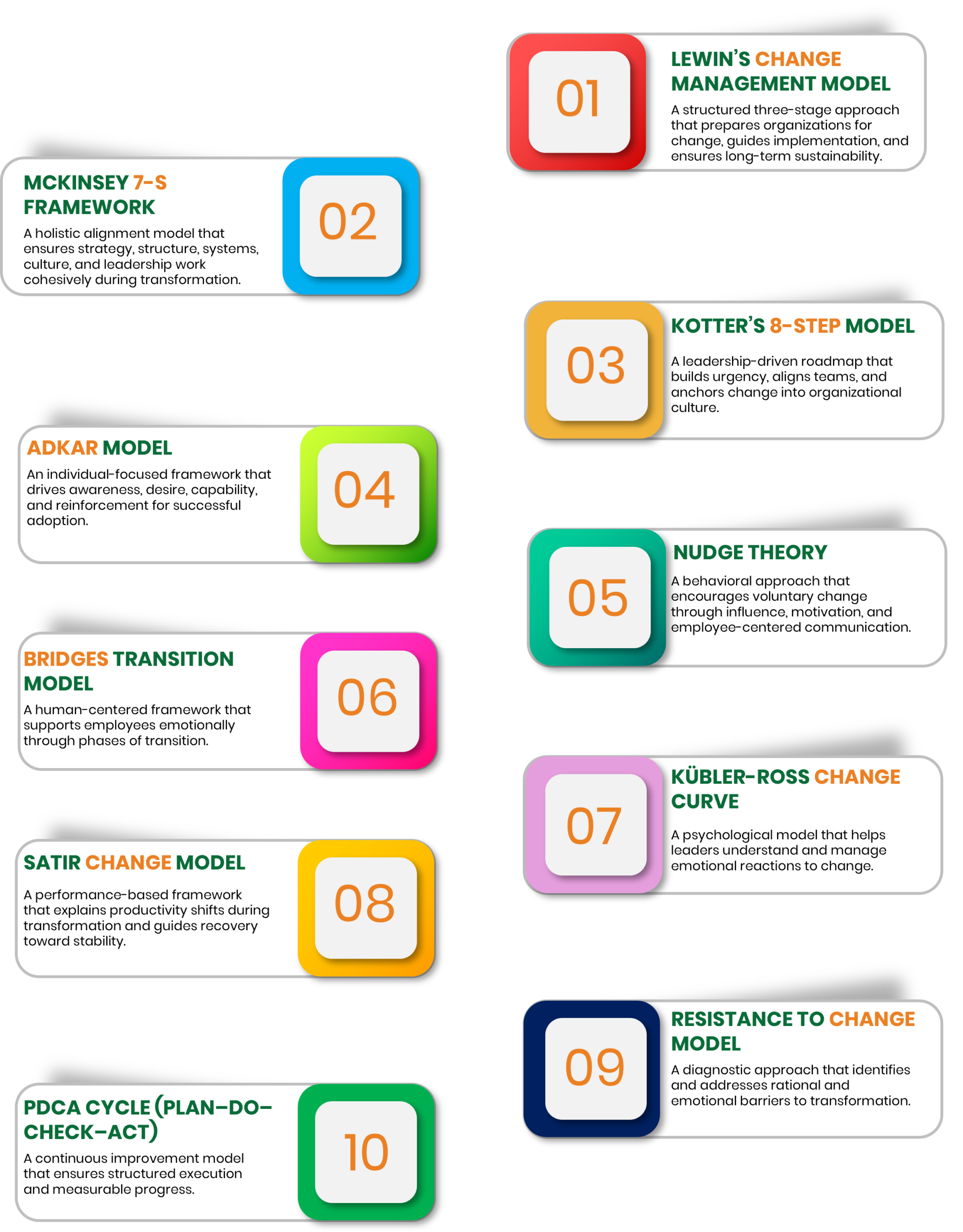
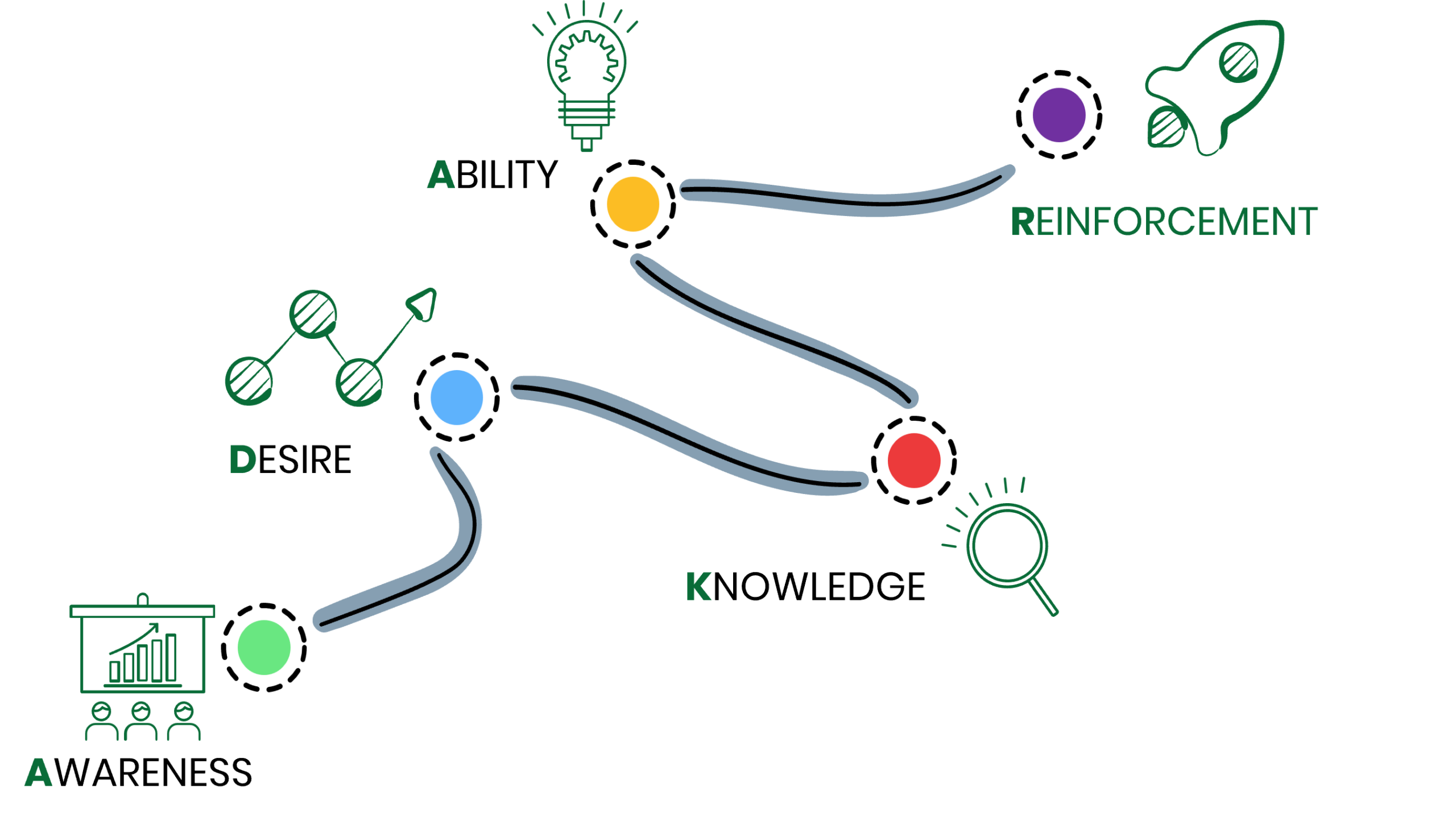
Effective change management integrates proven frameworks such as Lewin’s Unfreeze Change Refreeze model, Kotter’s 8-Step process, the McKinsey 7-S alignment framework, and the ADKAR model. These methodologies ensure that change is not implemented randomly, but systematically by creating urgency, aligning leadership, addressing emotional responses, building capability, and reinforcing new behaviors. This structured approach reduces disruption while increasing adoption and long-term sustainability
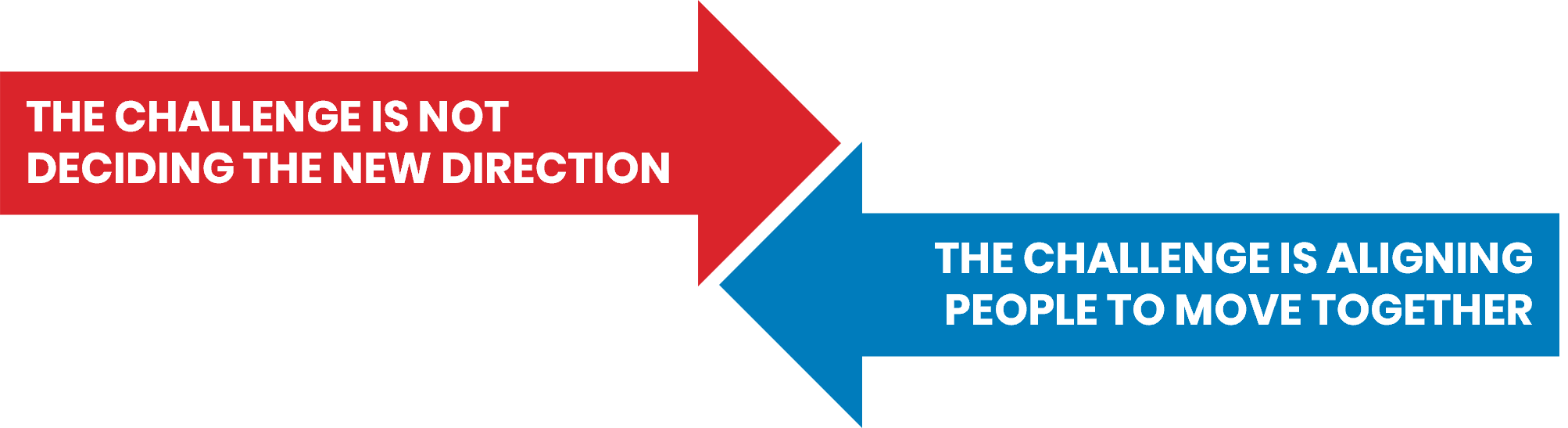
Ultimately, change management exists because organizations do not fail due to change itself; they fail due to unmanaged transition. When direction shifts, success depends on alignment.
A well-managed change process transforms uncertainty into clarity, resistance into engagement, and strategy into measurable results. It enables organizations to move forward together with confidence, resilience, and sustained performance.
Change is not defined by the speed at which circumstances evolve, but by the strength with which leaders guide their people through uncertainty. When vision is clear, communication is purposeful, and action is disciplined, change becomes more than a transition it becomes a catalyst for growth, resilience, and lasting competitive advantage.
Our training approach equips leaders not only with knowledge,but with the clarity, confidence,and practical discipline to apply what they learn and lead change with purpose.
CHANGE LEADERSHIP MODELS
DRIVING STRUCTURED CHANGE THAT STRENGTHENS CULTURE
CHANGE LEADERSHIP MODELS
To ensure a structured, holistic, and sustainable approach to transformation, our programs integrateglobally recognized change and leadership frameworks.
LEWIN’S CHANGE MANAGEMENT MODEL
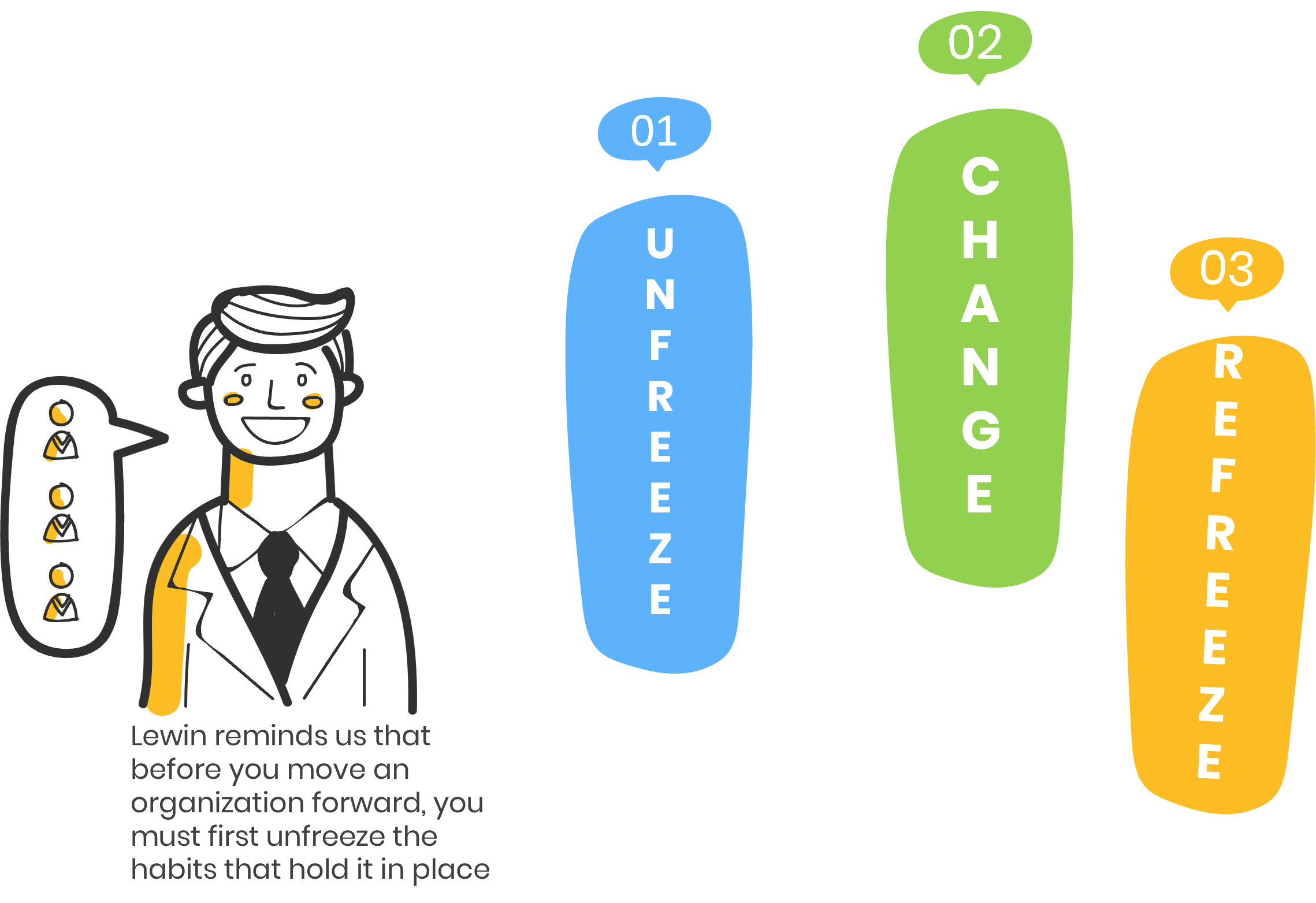
Our change management philosophy is guided by Lewin’s Change Management Model, developed by Kurt Lewin a structured framework that brings clarity, stability, and discipline to organizational transformation.
- Through the three stages of Unfreeze, Change, and Refreeze, we help leaders prepare their teams for transition, implement new strategies with confidence, and reinforce new behaviors to ensure long-term sustainability. The Unfreeze stage builds awareness and readiness, the Change stage drives execution with communication and support, and the Refreeze stage secures lasting results by embedding new practices into daily operations.
- Rooted in preparation, alignment, and reinforcement, this approach enables organizations to manage transformation with confidence while maintaining performance and stability.
MCKINSEY 7-S FRAMEWORK
- Strategy: The plan designed to achieve competitive advantage and organizational goals.
- Structure: The organizational hierarchy and reporting lines that define how tasks and responsibilities are distributed.
- Systems: The processes, procedures, and tools used to manage daily operations and performance.
- Shared Values: The core beliefs and guiding principles that shape organizational culture and decision-making.
- Skills: The capabilities and competencies of employees within the organization.
- Style: The leadership approach and management behavior that influence workplace culture.
- Staff: The workforce, including talent, roles, and human resource allocation across the organization.
Our change management philosophy is strengthened by the McKinsey 7-S Framework, developed by McKinsey & Company a comprehensive approach that ensures transformation is aligned across every dimension of the organization.
- Rather than focusing on isolated initiatives, the 7-S framework examines seven interconnected elements: Strategy, Structure, Systems, Shared Values, Skills, Style, and Staff.
- It ensures that organizational direction, leadership approach, processes, capabilities, and culture are fully aligned to support sustainable change.
- When these elements move together, transformation becomes cohesive and effective rather than fragmented.
- By applying this integrated lens, we help organizations identify misalignment, close performance gaps, and create harmony between vision and execution ensuring that change is not only implemented, but fully embedded across the organization
KOTTER’S 8 STEPS FOR LEADING CHANGE
Our approach to leading transformation is inspired by Kotter’s 8-Step Process a
people-centered framework that turns vision into sustained action.
- This methodology emphasizes creating urgency, building strong leadership coalitions, communicating a compelling vision, and removing barriers that slow progress.
- It focuses on generating short-term wins to build confidence, sustaining momentum throughout implementation, and anchoring change firmly within the organizational culture.
- By prioritizing alignment, engagement, and disciplined execution, this approach ensures that change is not only initiated successfully but embedded and sustained over time.
KOTTER’S 8 STEPS FOR LEADING CHANGE
